


Persistent eye irritation is more than just a minor inconvenience. If you regularly experience a gritty, burning sensation or find your eyes watering uncontrollably when walking down the high street, you could be suffering from Dry Eye Syndrome. This chronic condition affects thousands of people across West London, many of whom spend months trying generic, over-the-counter eye drops with little to no permanent relief.
At Feltham Eyecare Centre, our independent West London practice has been at the forefront of advanced clinical eye care for over 20 years. We step away from generic, temporary “one-size-fits-all” drop recommendations. We treat you as an individual, taking the time to uncover the precise root cause of your discomfort so you can see well, look great, and feel spectacular.
Our dedicated Dry Eye Clinic is operated in clinical partnership with independent prescriber and Moorfields Eye Hospital optometrist Salman Siddiqui, who also practises at the Moorfields Eye Clinic within the Ealing Hospital clinical hub. By combining world-class hospital expertise with cutting-edge diagnostic and therapeutic technology, we deliver premium, tailored solutions that restore long-term comfort to your daily life.
What is Dry Eye Syndrome?
Dry Eye Syndrome is a multifactorial medical condition of the ocular surface that occurs when your tears are unable to provide adequate, stable lubrication for your eyes. Tears consist of a highly balanced, specialised mixture of water, fatty oils, and mucus that keeps the ocular surface smooth, clear, and protected against environmental irritation.
In alignment with official diagnostic standards from The College of Optometrists and the global clinical consensus established by the Tear Film & Ocular Surface Society (TFOS DEWS II), chronic dry eye typically develops for one of two core clinical reasons:
-
- Evaporative Dry Eye: This is recognised as the most prevalent form of the condition. It occurs when the water in your tears evaporates too quickly, usually caused by a blockage in the Meibomian glands (the tiny glands in your eyelids that produce the essential oily layer of your tear film). This malfunction is clinically known as Meibomian Gland Dysfunction, or MGD.
-
- Aqueous-Deficient Dry Eye: This is categorised by a distinct reduction in lacrimal secretion, meaning the watery component of the tear film is physically insufficient to keep the surface of the eye properly moisturised.
The Real Symptoms: How Does Dry Eye Feel?
Modern search engines often summarise dry eye as simple dryness, but patients visiting our specialised clinic report a much wider, more frustrating range of physical sensations:
-
- A constant gritty, sandy, or painful feeling, as if a foreign particle is permanently stuck under the eyelid.
-
- A hot, burning, or stinging sensation that worsens in air-conditioned environments, under bright supermarket lighting, or when staring at digital screens.
-
- Paradoxical watering or streaming eyes, where severe irritation triggers a flood of reflex tears that lack the correct oil balance and roll down your cheeks without lubricating the eye.
-
- Blurred vision or fluctuating clarity, especially when reading, working, or driving around local areas like Bedfont and Hanworth.
-
- Heavy, tired eyelids and afternoon eye strain.
Our 4-Tiered Diagnostic & Treatment Pathway
When you visit our clinic, we focus entirely on your unique eye profile. Because standard artificial drops evaporate just as quickly as your natural tears if an underlying oil deficiency is present, we provide a structured, advanced treatment pathway to achieve lasting relief.
1. Advanced Dry Eye Assessment Suite (£89)
Successful treatment begins with an accurate, data-driven diagnosis. Our practice has invested heavily in the advanced SBM System Dry Eye Analysis Suite. This hospital-grade diagnostic technology takes complete, objective digital measurements of your tear film layers, visually evaluates the quality of your eye’s natural oils, and closely assesses your overall meibomian gland function to eliminate guesswork.
Clinical Assessment Requirements:
-
- Standalone Dry Eye Assessment: £89. Note: Patients must possess a valid, written optical prescription from within the last two years.
-
- Combined Advanced Exam & Dry Eye Assessment: £150. This combined 1-hour appointment is required if your prescription has expired. For NHS patients, a £25 deduction is applied to cover the NHS clinical element.
-
- The Eyeplan Advantage: We utilise Eyeplan as a fee-based care structure. If you sign up for our tailored Eyeplan dry eye tier, your ongoing clinical assessment fees are covered, making advanced care and bespoke eyewear highly affordable.
2. Blefacalm & BlephEx (Bacterial Cleansing)
Chronic surface irritation is frequently driven by blepharitis, which is a buildup of bacterial debris, biofilm, and crusting along the lash line that inflames the eyelids. To address this, we offer high-precision, deep clinical cleansing using specialised Blephacam and BlephEx systems. This thorough, gentle process completely clears deep-seated eyelid buildup, instantly reducing redness and creating a pristine surface environment for your eyes to heal.
3. Meibomian Gland Expression
When Meibomian Gland Dysfunction (MGD) causes the essential lubricating oils of your eye to become thick and blocked, physical intervention is necessary. Following a precise clinical warming therapy to soften the trapped lipids, our clinicians perform professional meibomian gland expression. This clears the blocked pathways, restarts a healthy, natural oil flow, and protects your tear film from rapid evaporation.
4. Advanced E-Light IPL Laser Therapy
For patients seeking a highly comprehensive, long-term solution to severe or chronic dry eye, we provide cutting-edge E-Light IPL (Intense Pulsed Light) laser therapy. This advanced clinical treatment uses safe, targeted light pulses from our specialized Essilor E-Light system to stimulate the neurovascular pathways around the eyes, melt hardened oils inside the meibomian glands, and significantly reduce deep-seated eyelid inflammation. Administered by Salman Siddiqui over a series of dedicated clinical appointments, E-Light IPL treats the underlying causes of dry eye to restore true ocular comfort.
Interactive Dry Eye Screener (The OSDI-6 Test)
Don’t guess about your eye health. While you browse our services or wait for your appointment in our practice, take the clinical OSDI-6 (Ocular Surface Disease Index) questionnaire below to check your symptoms. Questions include:
- Have your eyes been sensitive to light over the last week?
- Have your eyes felt gritty, painful, or sore?
- Have your eyes felt blurred or given you fluctuating vision?
- Has reading caused your eyes physical discomfort?
- Has watching television or using a digital screen made your eyes feel strained?
- Has driving at night or in windy conditions caused your eyes to water or sting?
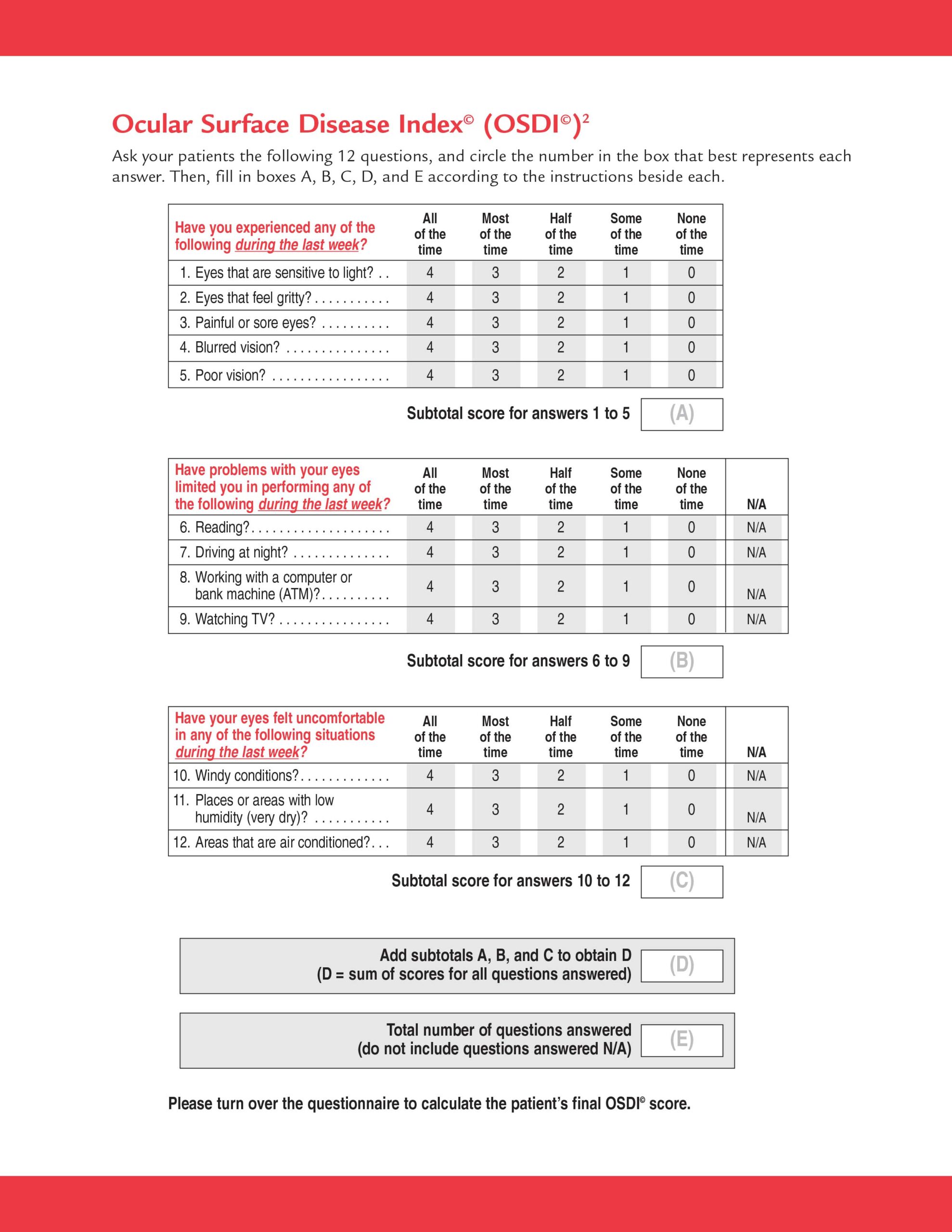
Your Scoring Result: If your symptoms score 12 or higher, you meet the clinical threshold for dry eye. Contact our West London clinic today on 020 8867 0406 to speak with our clinical team or schedule your comprehensive 1-hour assessment.
Frequently Asked Questions
Can dry eye be permanently cured? For most individuals, dry eye is a chronic condition that requires structured, ongoing management rather than a temporary, one-time cure. With the right clinical care from our specialist team and a personalised maintenance routine, you can eliminate daily discomfort, stop the burning sensation, and protect your long-term vision.
Can I still wear contact lenses if I have dry eye? Yes, but you need specialist guidance. Standard contact lenses can aggravate dry eye symptoms. Our clinical team specialises in sourcing advanced, highly breathable lens materials and specialised comfort drops that allow you to wear your lenses comfortably without triggering surface irritation.
Does screen time make dry eye worse? Absolutely. When looking at computers, tablets, or smartphones, our natural blink rate drops by up to 50 per cent. Fewer blinks mean your tear film is not being spread evenly across the eye, leading to rapid tear evaporation, dry patches, and severe afternoon eye strain.
Ready to Relieve Your Dry Eyes?
You do not have to live with the constant discomfort of stinging, watering, or gritty eyes. As Optician Awards finalists for 2025, our independent team has over two decades of local experience helping West London patients see well, look great, and feel spectacular.
-
- Book Your Consultation: Secure your comprehensive, unhurried 1-hour advanced eye examination and dry eye analysis online via our booking portal.
-
- Speak to Our Team: Call our Feltham practice directly on 020 8867 0406 to discuss your symptoms with our friendly team.
Clinical References & Sources
-
- TFOS DEWS II Definition and Classification Report: Global consensus statement on Dry Eye Disease. Tear Film & Ocular Surface Society (Elsevier).
-
- Clinical Management Guidelines: Dry Eye: Evidence-based diagnosis and treatment pathways. The College of Optometrists.
-
- Patient Guide to Ocular Lubrication and Lid Hygiene: Clinical standards for managing Meibomian Gland Dysfunction. The Royal College of Ophthalmologists.