


Red-green colour vision deficiency (often called colour blindness) affects around 1 in 12 men and 1 in 200 women, and many have never had it looked at properly. Our team in Feltham can check your colour vision and talk you through COLORON filter lenses.
Colour vision deficiency usually isn’t about seeing in black and white. It’s the everyday moments where certain shades are hard to tell apart.
Seven quick questions, about a minute. Answer for yourself, or for your child.
This quiz is a guide, not a test or a diagnosis. Only a proper colour vision check can tell you for sure.
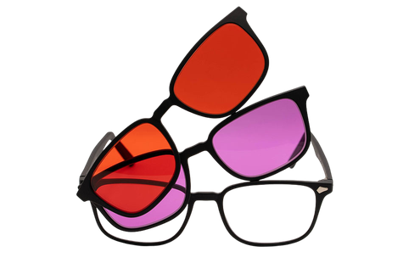
COLORON filter lenses are a Class I medical device for people with red-green colour vision deficiency. They filter certain wavelengths of light to enhance your ability to tell reddish and greenish shades apart, which may help with everyday tasks that rely on colour.
Some wearers report that certain shades look more vivid or distinct. Everyone’s colour vision is different, so individual experiences vary, and that’s why we start with a proper check.
Many people only ever have the dotted-number test and are told “you’re colour blind”. We take the time to understand which colours you find tricky and what matters to you, at work, at home and in your hobbies.
Colour vision deficiency often runs in families, so if a son, brother or father has it, others may want a check too. There’s a free online check designed for children as well.
He’s 41 and has been colour blind all his life. Everyday things, like helping his daughter and son with their homework, were always a struggle. About ten minutes after putting on his COLORON glasses, he told us:
One person’s experience. Everyone’s colour vision is different, and individual experiences vary.

COLORON filter lenses are clip-ons, so you can keep your usual glasses and add the filter when you want it. Which one suits you depends on the type and level of your colour vision deficiency.
Like any new glasses, it takes time to get used to them. Many people find wearing them regularly over the first few weeks helps them get the most from their lenses.
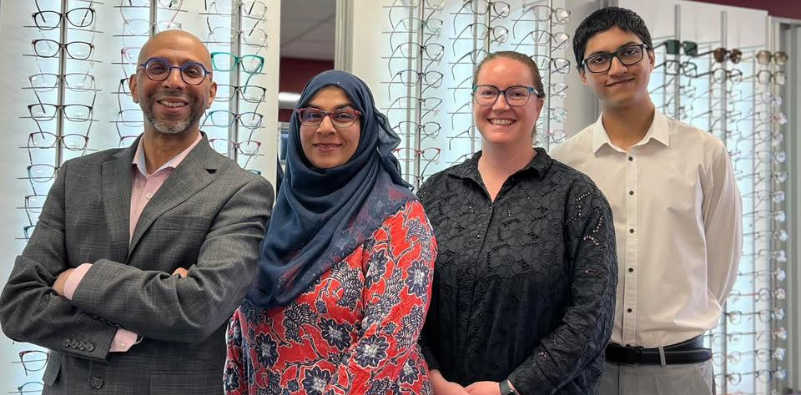
Feltham Eyecare Centre is an independent optometrist and opticians at 92 Bedfont Lane. You’ll be looked after by a local team who take the time to listen.
At Feltham Eyecare Centre, 92 Bedfont Lane, Feltham TW14 9BP. We’re easy to reach from Bedfont, Hanworth, Hatton, Ashford, Hounslow and across West London. Call 020 8867 0406 to book.
We start with a chat about where colour trips you up, check your sharp vision, then use the Ishihara plates and the COLORON colour vision test to find out the type and level of your colour vision deficiency. If COLORON filter lenses could help, you can try them in the practice.
No. Red-green colour vision deficiency is usually inherited and present from birth. COLORON filter lenses are designed to enhance your ability to tell reddish and greenish shades apart, which may help with everyday tasks that rely on colour. Individual experiences vary.
Yes. Colour vision deficiency is present from birth and often runs in families, so it’s worth checking early. There’s also a free online check designed for children you can try first.
COLORON filter lenses are not suitable for use in safety-critical professions including aviation, rail and water transport. Where accurate colour perception is essential at work, their use must be assessed and authorised by the relevant occupational health and safety authority.
No. COLORON filter lenses are clip-ons, so you keep your usual glasses and add the filter when you want it.
We see people from Feltham, Bedfont, Hanworth, Hatton, Ashford, Hounslow and across West London.
92 Bedfont Lane, Feltham, Middlesex TW14 9BP
COLORON filter lenses are intended for red-green colour vision deficiency compensation. Individual experiences vary. They are not suitable for use in safety-critical professions including aviation, rail and water transport. Where accurate colour perception is essential at work, their use must be assessed and authorised by the relevant occupational health and safety authority.